



The following article was written by Jason Prigge, the Development Director at the Woodland Dunes Nature Center.
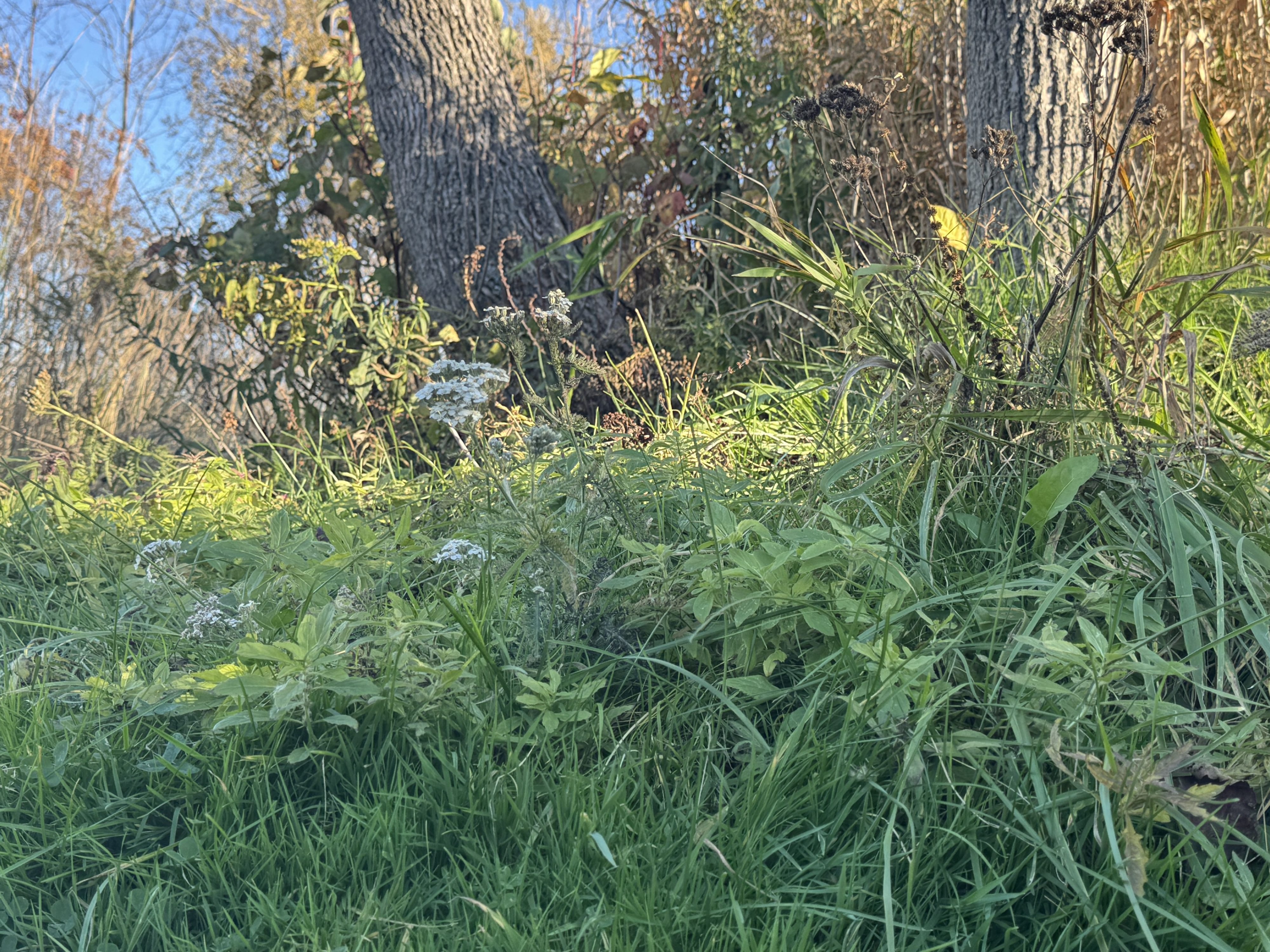
At first glance, a forest appears to be a collection of individual trees. Each one grows from its own roots and reaches up towards the sunlight. We might be tempted to see it as a place where everything exists primarily for itself. But I don’t think that is true. If you look a little closer, you will see a much more interesting and connected story. A forest is an extraordinary network of relationships. Trees interact with fungi in the soil, exchanging sugars produced through photosynthesis for nutrients and water. Insects pollinate plants and provide food for birds. Fallen leaves decompose, returning nutrients to the earth. Countless organisms contribute to a processes that sustain the entire ecosystem. No single tree, plant, or animal exists independently of everything around it.
The forest is a community.
I have the biggest break room in the world and when I walk out of my office and head down a trail for some fresh air, I often think about how this concept reflects something important about our own lives. We live in a culture that frequently celebrates independence and individual achievement. We admire the person who succeeds through determination, talent, or hard work. Those qualities matter. However, no one is successful alone. Our lives are shaped by relationships, opportunities, encouragement, and the contributions of people whose names we may never know. The communities we depend upon are sustained by countless acts of cooperation, generosity, and service. In that sense, we are not so different from the forest.
Aristotle described human beings as social creatures, recognizing that our well-being is deeply connected to community. I think nature illustrates that idea perfectly. For instance, the relationship between a tree and the fungi associated with its roots. These organisms are very different, yet their interactions can benefit both. The tree supplies carbon compounds, while the fungi help the tree acquire resources from the soil. Their differences are not obstacles to the relationship. They are part of what makes it valuable. Maybe we could benefit from remembering that.
Of course, nature is not a perfect model of harmony. Competition, and conflict are also essential parts of ecological systems. But it does demonstrate a fundamental truth: relationships matter.
The health of a forest cannot be fully understood by just examining its individual organisms. We must also understand the connections between them. The same is true of our communities.
The next time you walk through Woodland Dunes, look beyond the individual trees. Notice the plants growing beneath them, the birds and animals living in them, and the signs of life that connect one part of the forest to another. You might begin to see something larger than a collection of living things. You may see a community. I think it is a reminder that our greatest strength is not always found in standing alone, but in learning how to thrive together.


