



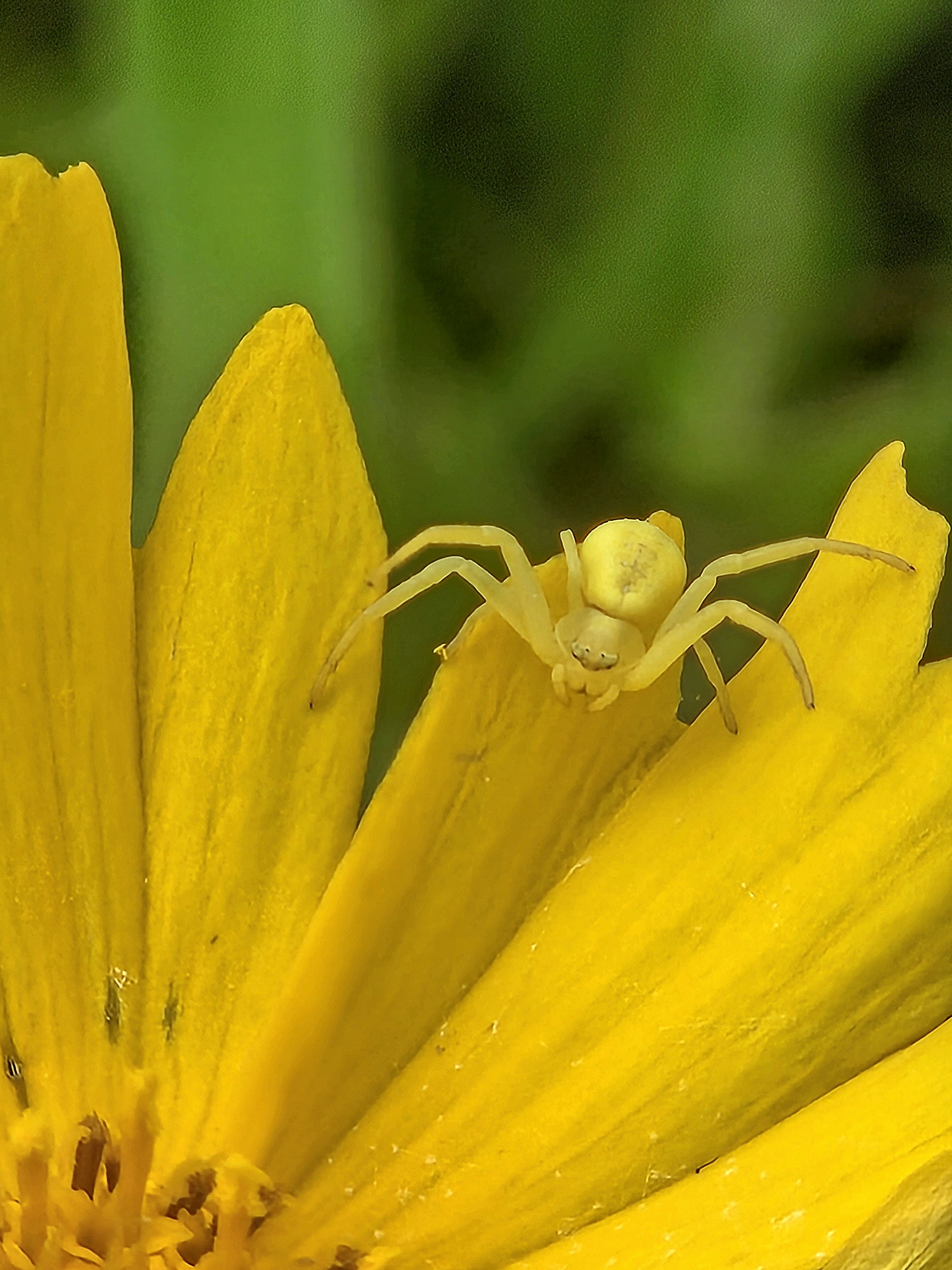
Photo Credit - Kennedy Zittel, Woodland Dunes Nature Center Naturalist
The following article was written by Jess Johnsrud, the Education Coordinator at the Woodland Dunes Nature Center.
Many people think of October as a spooky season and watch scary movies, dress in costumes, and think about “creepy, crawly” creatures. One of the creatures that is often part of Halloween festivities is the spider. Some people find them to be scary and off-putting, but I find that learning more about these kinds of creatures helps us to better understand and appreciate them.
Spiders are an important part of nature, eating pests like flies, aphids, and cockroaches. A single spider can eat roughly 2,000 insects a year! They also serve as an important food source for birds, frogs, snakes, and many other animals. Scientists believe that the presence of spiders in an environment is a sign that the ecosystem is relatively clean and free of toxins. Perhaps having a few in the house isn’t so bad after all?
There are many kinds of spiders but there are a couple groups that I find to be very interesting. One of those groups is the fishing spiders. They are some of the largest in Wisconsin and can be up to three inches across when including their legspan. Legspan is the total width measured from the tip of a leg on one side of a spider’s body, to the tip of the leg on the opposite side. They live near lakes and streams and hunt small aquatic bugs, tadpoles, and minnows. Wolf spiders do not catch their prey in a web, instead they sit at the water’s edge with their front legs on top of the water to feel vibrations of moving prey. Then grab an unsuspecting meal. They have small, waxy hairs on their legs that repel water and help the spider walk on the surface without sinking in. A more endearing fact about wolf spiders is that the female carries her large egg sac around in her jaws until the young are ready to hatch. Once they hatch, mother wolf spider will build a silken nursery web and guard her spiderlings until they are older.
Another interesting group of spiders are the crab spiders. They can be identified by their longer, thicker first set of legs (similar to a crab). They also have flat or elongated bodies and walk sideways and backward (most spiders move forward and backward). Crab spiders sit quietly on a plant and ambush wasps, flies, and other small bugs they like to eat. Female goldenrod crab spiders can even change color between white and yellow to camouflage to the flower it is hunting from. They are the chameleons of the spider world!
I think spiders are pretty interesting critters and I enjoy learning about them. Next time you see one, take a moment to observe it rather than squish it. You may be surprised at the delicate patterns on their bodies or be lucky enough to watch a spider spin its web!


