



The following article was written by Kristen Smith, a Youth Services Associate at the Manitowoc Public Library.
Experience the Anishinaabe culture of art and dance at Manitowoc Public Library!
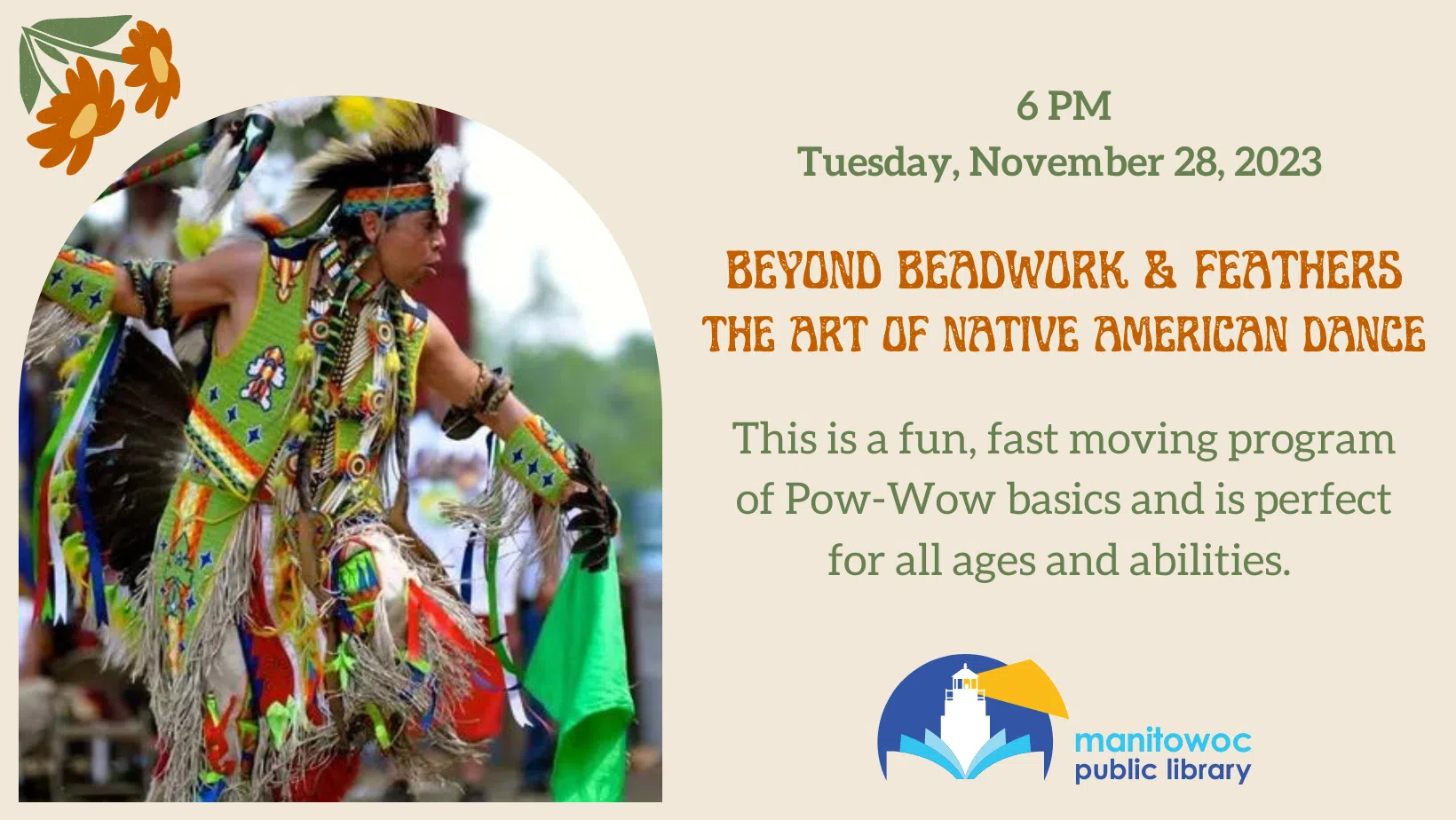
Join us on Tuesday, November 28, at 6 PM when Guest Presnter, Marin (Mark) Denning, will explain the dance styles and protocols of Powwows, including traditional dance regalia, the meaning behind designs, and the music. This is a fun, fast moving program of Powwow basics and is perfect for all ages and abilities. Everyone is welcome to attend.
Marin’s passion is helping teachers, students, and organizations understand and appreciate Indigenous culture from a historical and contemporary point of view. Marin states, “One of the most toxic barriers to education about American Indian people are the images of us being depicted in beads, feathers, and furs without context. Simply stated, stereotypes stop progress. If a teacher asked their class to draw a picture of Native people on a sheet of paper, we’d know better where to begin our lessons.”
What is a Powwow?
A powwow is more than just a gathering—it’s a vibrant celebration of Indigenous culture, tradition, and community. These lively events bring together First Nations communities, providing a space for socializing, dancing, singing, celebration, and honoring ancestral heritage. Let’s delve into the rich tapestry of powwows, exploring their significance, history, and the heartbeat of these exciting gatherings.
These gatherings are characterized by rhythmic drumming, colorful regalia, and spirited dances. At powwows, dancers perform intricate steps, each movement steeped in tradition. The rhythmic beat of drums accompanies them, echoing the heartbeat of the community. Singers harmonize, their voices carrying stories of resilience and connection.
Powwows pay homage to ancestors, acknowledging their wisdom, struggles, and resilience. Participants don regalia adorned with symbols representing their heritage, connecting the past to the present. Some powwow events feature competitive dancing, where participants vie for monetary prizes. Dancers showcase their skills, blending tradition with innovation.
Powwows can be intimate family gatherings or large-scale public events. They occur both indoors and outdoors, fostering a sense of unity and belonging. Contemporary Powwows bring together individuals from many different Nations. Each of the eleven federally-recognized American Indian Nations in Wisconsin hosts powwows.
How can I learn more?
Caregivers, if you wish to provide some context about Powwows and their importance as an Indigenous tradition to your charges, please check-out the fabulous book, Jingle Dancer, by Cynthia Leitich Smith. This is short picture book gives learners a contemporary view of an Indigenous family framed by one child’s quest to dance following the tradition of women in her community. It provides insight into both Powwows and the importance of regalia.
Kirsten Smith
If you enjoy fast-paced thrillers, Firekeeper’s Daughter, by Angeline Boulley, provides vivid descriptions of a contemporary Powwow and explores the importance of tradition, ancestors, and rites of passage through the eyes of protagonist, Daunis Fontaine. According to NPR, “The author’s love for and connection to her culture is so deeply engraved into the very heart of this book and it beats in rhythm with each new plot development. As a non-Indigenous reader, every depiction and explanation of Ojibwe philosophy and traditions felt like a gift, and every depiction of injustice felt like a call to action.”
Fans of non-fiction can learn more about Powwow culture, songs, dances, and regalia in Powwow: A Celebration through Song and Dance, by Karen Pheasant-Neganigwane. This book has many vibrant photographs of contemporary Powwows, but also delves deep into the origin of Powwows. As a lifelong competitive Powwow dancer, Karen Pheasant-Neganigwane is a guide to the protocols, regalia, songs, dances and even food you can find at Powwows from coast-to-coast, as well as the important role they play in Indigenous culture and reconciliation.
Powwows are more than dance and song; they are living expressions of Indigenous resilience, creativity, and unity. As the drum beats echo across the powwow grounds, they remind us of the strength found in cultural continuity. So, whether you’re a seasoned dancer or a curious observer, join a public powwow—it’s an invitation to celebrate, learn, and honor the vibrant tapestry of First Nations heritage.
Please join us on Tuesday, November 28, at 6 PM for Beyond Beadwork: The Art of Native American Dance. This is a program for all ages and abilities, and will be held in the Balkansky Community Room at Manitowoc Public Library.


