



The following article was written by Kristen Smith, a Youth Services Associate at the Manitowoc Public Library.
Social-emotional development and academic success are much more related than many people think. Research indicates that children must be mentally healthy and establish good interpersonal skills to find success at school. Emotional development skills include the ability to regulate behavior, to manage feelings, to feel competent in completing tasks, and confident in trying new things.
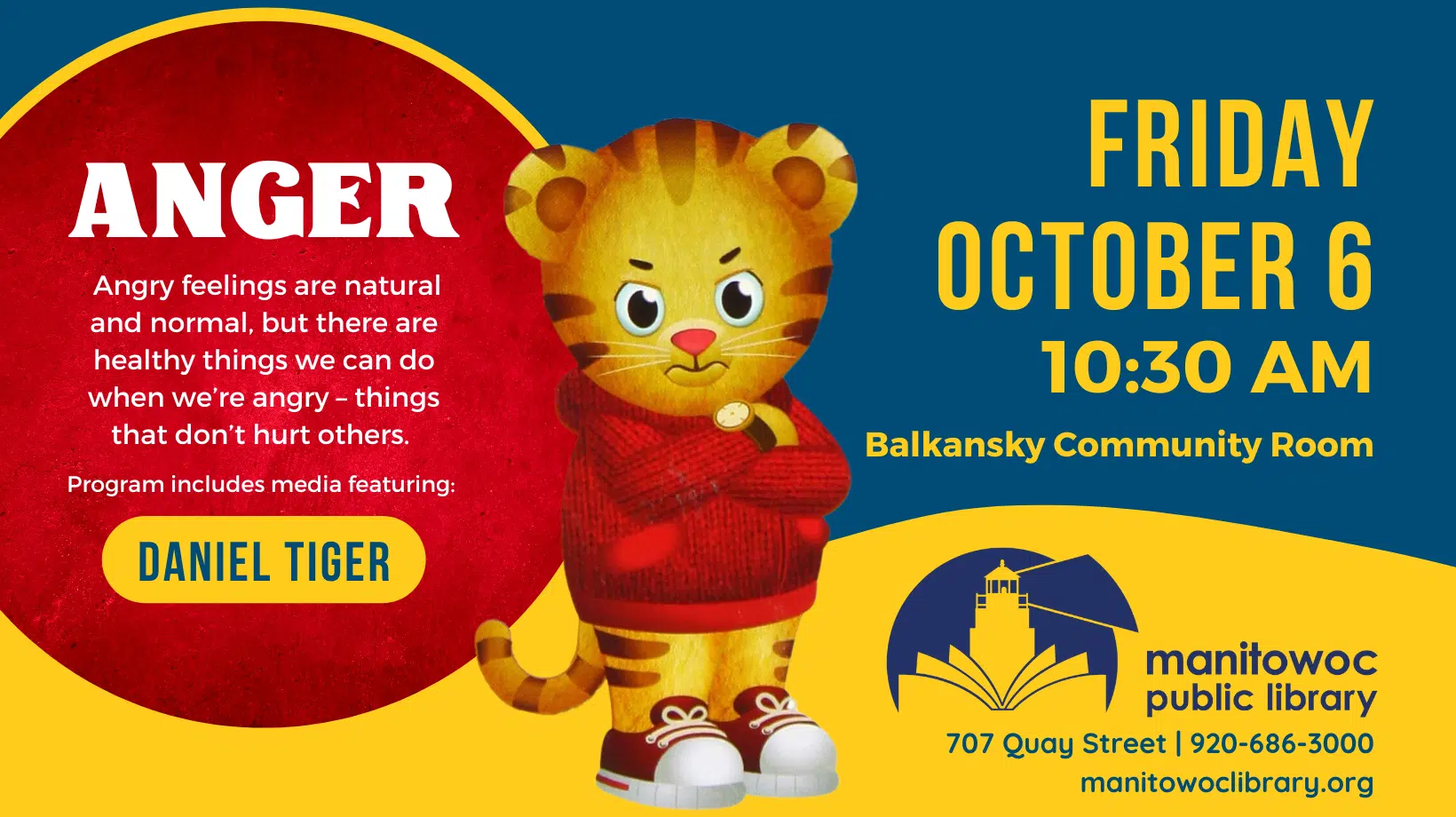
In the first of Manitowoc Public Library’s series of “Big Emotions for Little People,” we will address anger with the help of Daniel Tiger. Fred Rogers, children’s television host and creator of Daniel Tiger, believed in helping children find constructive ways to deal with their angry feelings. He wanted children and their parents to understand that anger is natural and normal. However, there are healthy things we can do when we’re angry—things that don’t hurt others.
When a child melts down and becomes aggressive, they can pose a serious risk to themselves and those around them. In fact, it is not uncommon for kids who have trouble controlling their emotions to direct their distress towards a caregiver. Negative behaviors may include screaming, cursing, throwing objects, or even hitting and biting. It is helpful to recognize that these behaviors are communication. A distressed child may not have the skills to manage their feelings and express them in a socially acceptable way. They may lack the language, impulse control, or problem-solving abilities required for self-regulation.
To aid your child in self-regulation:
- Stay Calm
Children learn from your example. When you use words to talk about your angry feelings, your child sees that there are things people can do when they’re mad that don’t hurt themselves or others.
- Communicate
Talk about different constructive ways people can handle their angry feelings. Help your child know that listening and compromising are powerful tools for working out conflicts.
- Praise Appropriate Behavior
Praise your child for small moments of control—for trying something hard, taking turns, or waiting. When your child is about to hit, but holds back, that’s an important time to say something like, “You wanted to hit, but you stopped yourself! I am so proud of you and how much you are growing!”
- Help Them Practice Problem-Solving Skills
Give your child ways to practice self-control by playing games like “red light, green light,” stringing beads, or moving toy cars along a “road” made from a piece of masking tape.

Kirsten Smith
If your child develops a history of lashing out, it may be because they have an underlying problem that requires treatment, in which case it would be wise to consult your pediatrician.
The “Big Emotions for Little People” series is geared towards preschoolers and includes media featuring Daniel Tiger, identification of emotions, strategies for self-control, and a craft. Please join us on Friday, October 6, at 10:30 AM in the Balkansky Community Room for the first program in this series.