



The following article was written by Max Kornetzke, the Land Manager at the Woodland Dunes Nature Center
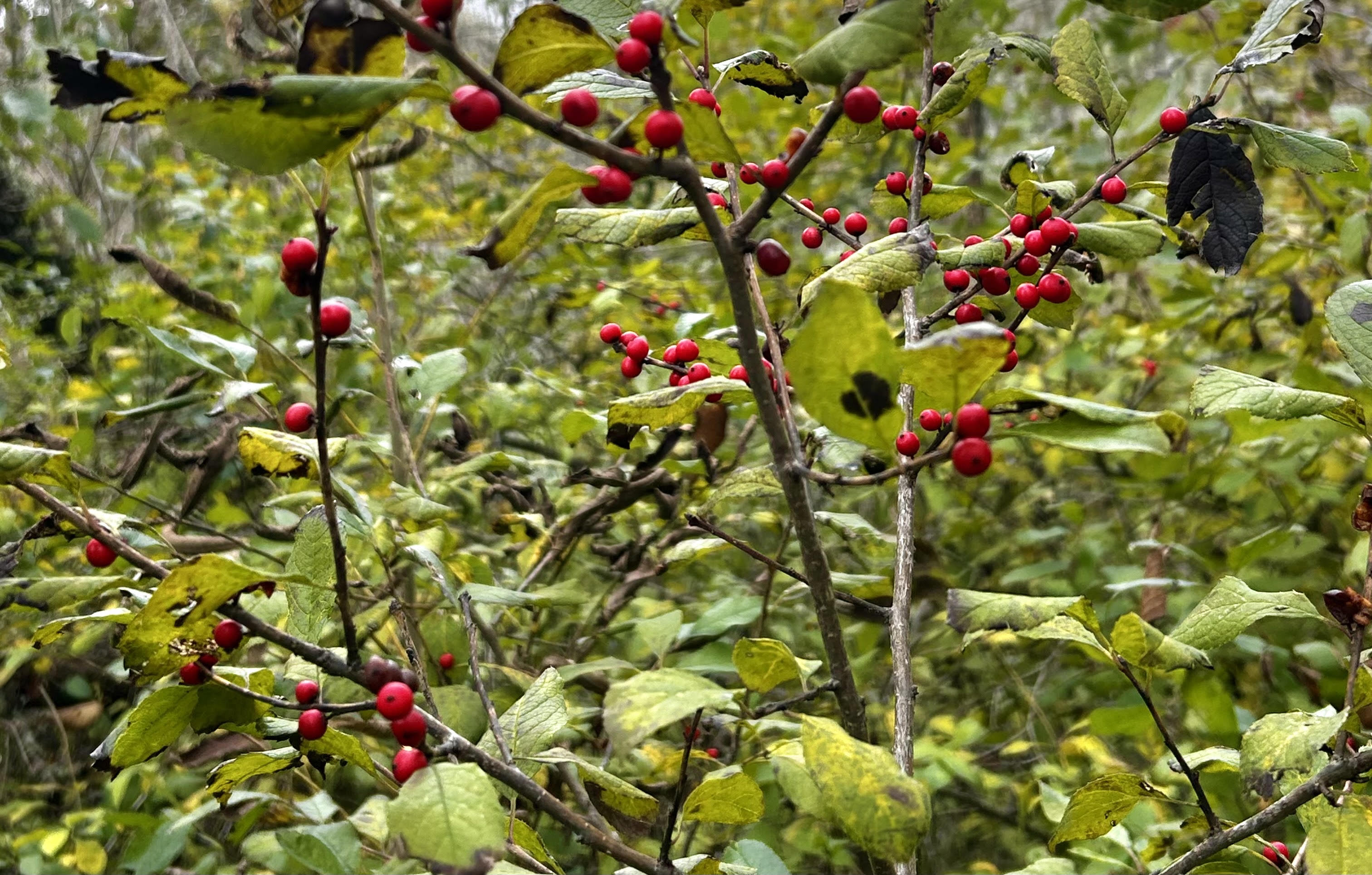
Winterberry (Ilex verticillata) is a native shrub of wetland forests and thickets and is a particularly common understory shrub growing in the swales and on the edges of ridges here at Woodland Dunes. It grows slowly and suckers to form thickets with dense horizontal branches that are excellent habitat for birds and other wildlife. Mature thickets can reach upwards of 10 feet tall, with many layers of branches.
Winterberry is dioicious, meaning male and female flowers are found on separate plants. The inconspicuous cream-petaled flowers emerge from leaf axils on new growth in June and early July. The flowers attract a variety of native insect pollinators, including small bees, beetles and butterflies. Winterberry is also the larval host for Henry’s Elfin (Callophrys henrici), a species of butterfly.
As fall approaches, the berries ripen to a bright scarlet. As fall peaks, the leaves of winterberry discretely transition from green to yellow and quickly fall to the forest floor. Then fall wanes and the landscape becomes more subdued. Now one can truly appreciate its apt common name, as the berries become evermore brilliant as they persist on their winter branches.
Both the structure of the plant and the persistent fruit are useful resources for overwintering birds. They are also beautiful plants for humans to admire and grow in their landscapes and gardens.
For those interested in adding these shrubs to their landscape, be sure to situate them in a location with plenty of moisture. They grow best with full to medium sunlight, but will also grow more slowly in shaded conditions. You can find these plants available for purchase from native plant nurseries and bareroot tree & shrub companies across Wisconsin.


