



The following article was written by Max Kornetzke, the Land Manager at the Woodland Dunes Nature Center.
Spring and fall have always been my favorite times of year. There is something so exciting and comforting about these periods of transition in the landscape. With the equinox now passed, I will savor the cool breezes and early hints of color.
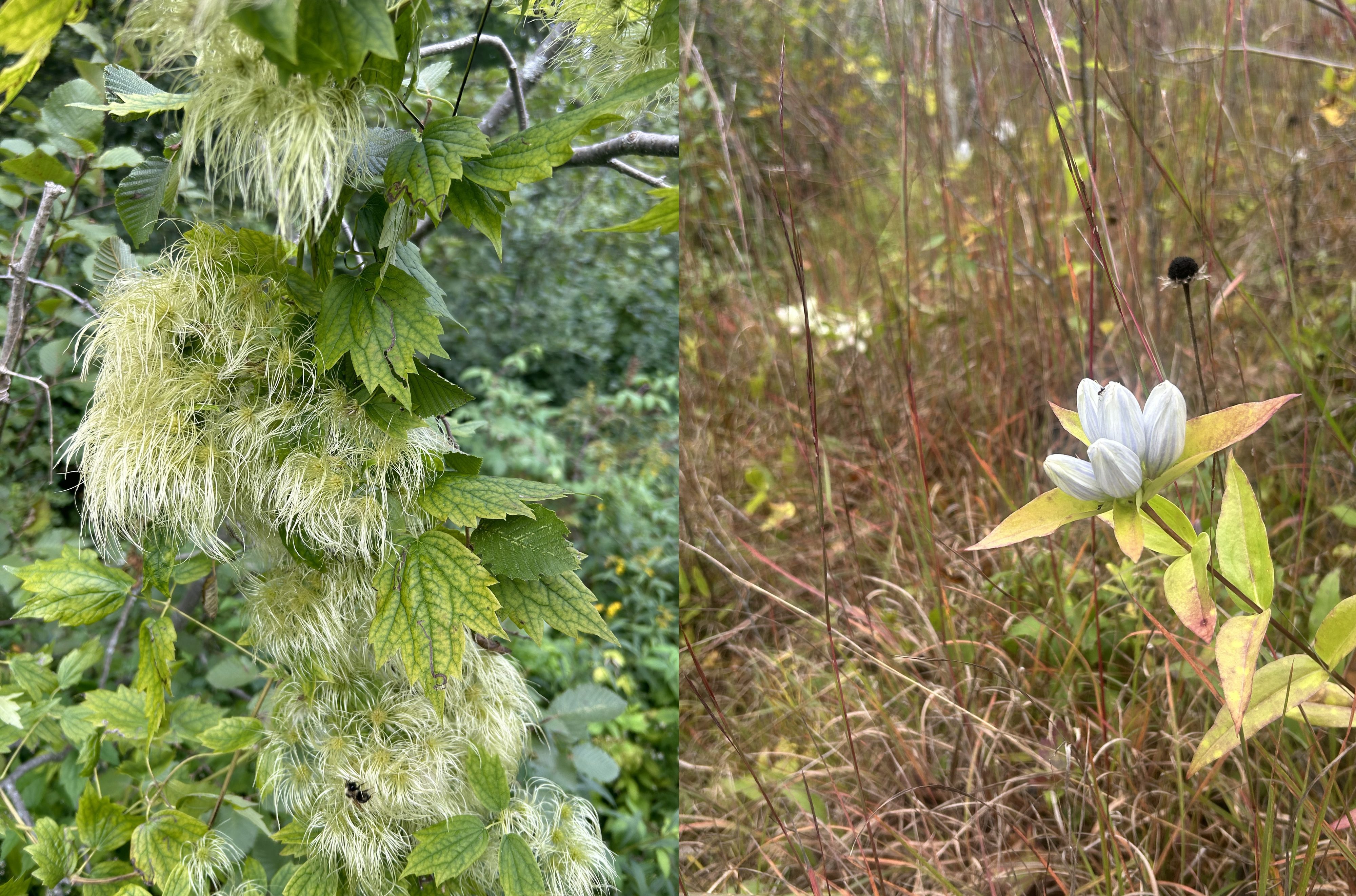
As a native plant enthusiast, I always associate fall with a bounty of seed. The finale of asters and goldenrod signal the ripening of many summer flowering species. I’ve found collecting and growing plants from seed to be one of the greatest ways I’ve developed an indelible bond with the land and local ecosystem.
This process has involved learning what plants look like vegetatively, what habitats they prefer, what time of year they flower, what their seed-bearing structures look like and when they are ripe, how to process and clean them, and what kind of stratification they may require in order to germinate. Along the way, you also learn how interconnected life is: which animals help pollinate a particular plant, which invertebrates use a particular plant as host, what kind of dispersal mechanism a plant has evolved to navigate the world as a sedentary being.
After a long winter, seeing seeds germinate in the spring is always a thrilling experience. Making observations as those seedlings develop has been a significant aspect of learning to identify plants on the landscape, regardless of the season.
The first plant part to emerge are cotyledons: embryonic leaves that help plants begin photosynthesis. Next are the first true leaves which often, but not always, look like miniature versions of the mature plant leaves. From there the plant continues to grow and develop a strong root system until it is a young seedling. For annuals and some perennial species that have a quick lifecycle, you will experience an immediate satisfaction as they reach a flowering stage in the first growing season. Other species require patience as they develop slowly and may take years to reach their flowering stage. Throughout that process, you can begin to appreciate the beauty of plant structures and forms as they develop, learning that these elements can be just as beautiful and interesting as flowers.
As the sunlight lessens and the dominant green of summer wanes, an entire spectrum of colors emerge: reds and oranges; yellows, purples, bronze and tans; grays, blacks and yet, still, some green. Mingled amongst these gradients of colors are the seeds of another generation of plants, waiting to be dispersed across the landscape.
Once you’ve watched something you hand collected and nurtured grow from cotyledon to mature plant, you cannot help but feel a greater connection and appreciation for the landscape around you.


