



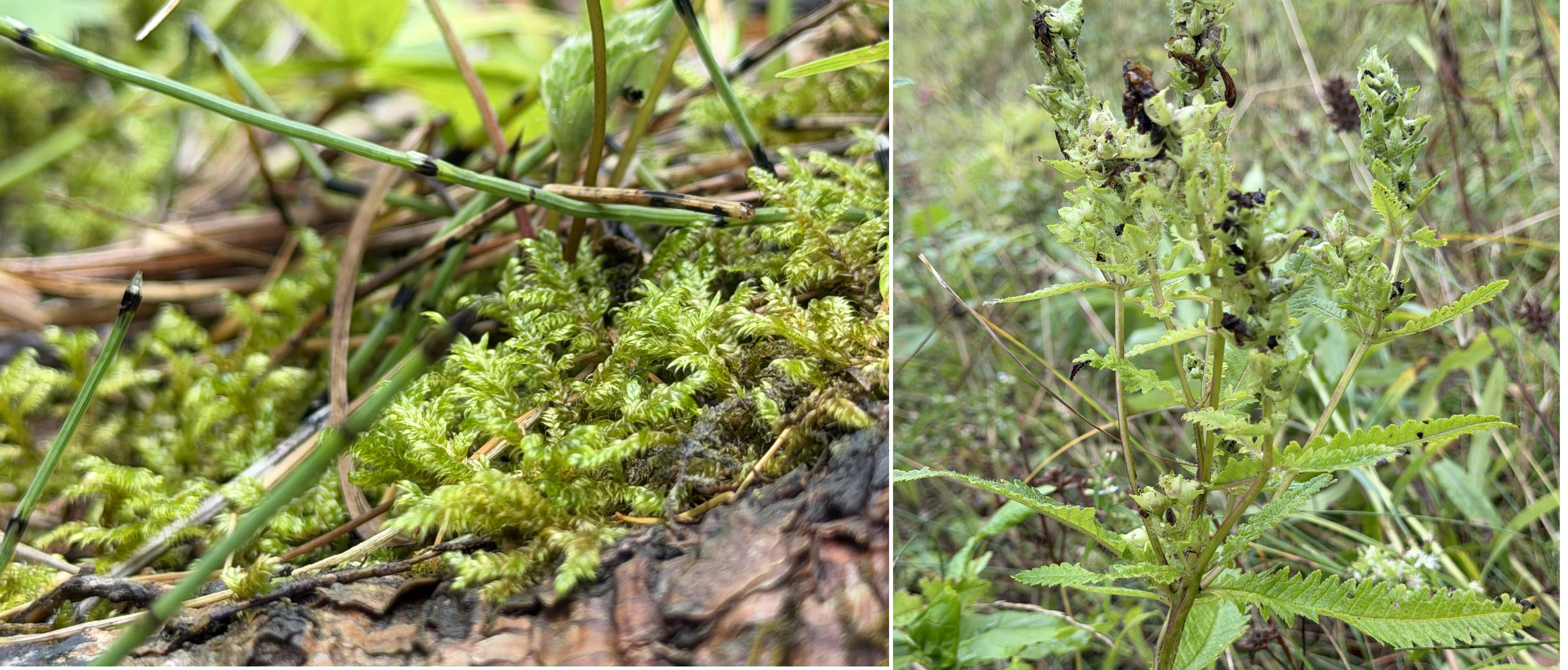
Photo Credit - Sue Crowley, the Executive Director of the Woodland Dunes Nature Center
The following article was written by Sue Crowley, the Executive Director of the Woodland Dunes Nature Center.
As we move into autumn and the leaves begin to carpet the forest floor with a collage of color, it helps direct my focus to the smaller plants that live low to the ground. Especially when hiking on a wet morning, the dew and moisture cause a glistening of the microsites down by our feet.
The soft carpet of mosses beneath my feet makes me appreciate the intricacies of nature. I love that there are tiny ecosystems within ecosystems. One such micro ecosystem is that of lichens. I have been learning a bit more about them and as our knowledge grows, we begin to understand that lichens are more than just two species helping each other. Remember lichens are composed of algae and fungus. Researchers and lovers of lichens believe that they function as an ecosystem not just an individual organism.
I decided to take our ATV out to our Horsetail Trail, which is quite overgrown. My purpose was two-fold. First, we just learned we need to make sure our ATV gets some good use or the spark plug clogs up and then when we really need it, it won’t start or run for long. Second, I wanted to get out to the trail more quickly because it’s been a while since I visited and I was pretty sure I could get a fun picture of either moss or lichen. Well, as you may see I have included a picture of moss with some horsetail plants, and you can also see the root of a tamarack tree in the foreground. Time to head back or not… Once outside, away from my screen it is easy to wander or at least linger as another plant catches my eye. One such plant that caught my eye today reminded me of sweetfern, but I knew that wasn’t it. I did a little research and learned that it is called swamp lousewort or swamp betony (Pendicularis lanceolata). I included a picture of it as well. Upon reading more about this plant, that I seemed to suddenly notice everywhere, I found out it is a hemiparasite. This means it still has chlorophyl to produce food, but it also depends on other nearby plants to thrive. Apparently, asters and native grasses are alternate host plants. The flowers in my picture are mostly senesced (reached the end of their life). Pollinators such as the Baltimore checkerspot butterfly like to frequent this plant.
Well, I hope you get to go outside on this day or in the days to come. See if you can find a plant that captures your eye and figure out what it is. Or maybe you recognize it but use your curiosity to really observe and learn something new about it.


