



The following article was written by Max Kornetze, the Land Manager at the Woodland Dunes Nature Center.
The end of winter usually brings a few warm days filled with birds chirping. They conjure anticipation for the unfurling of true spring. I can see the ephemeral displays of showy woodland flowers in my mind. I remind myself to be patient and enjoy the transition. It seems once the bright green of spring gets going it quickly cascades into summery heat.
I set out to see the emerging details and am surprised when I run into others unexpectedly. On a balmy day this week I was cutting some buckthorn when I started to hear the buzz of a honeybee whorling around me. The freshly emerged creature seemed curious, investigating me as I worked. Walking back through a low, wet meadow, I noticed a tiny white moth fluttering about. Beyond the meadow was a thicket of willows. As I passed by I observed the buds already beginning to break open, exposing the cottony fluff of this year’s catkins. In a few weeks these willows will be a powerful resource for our earliest pollinators.
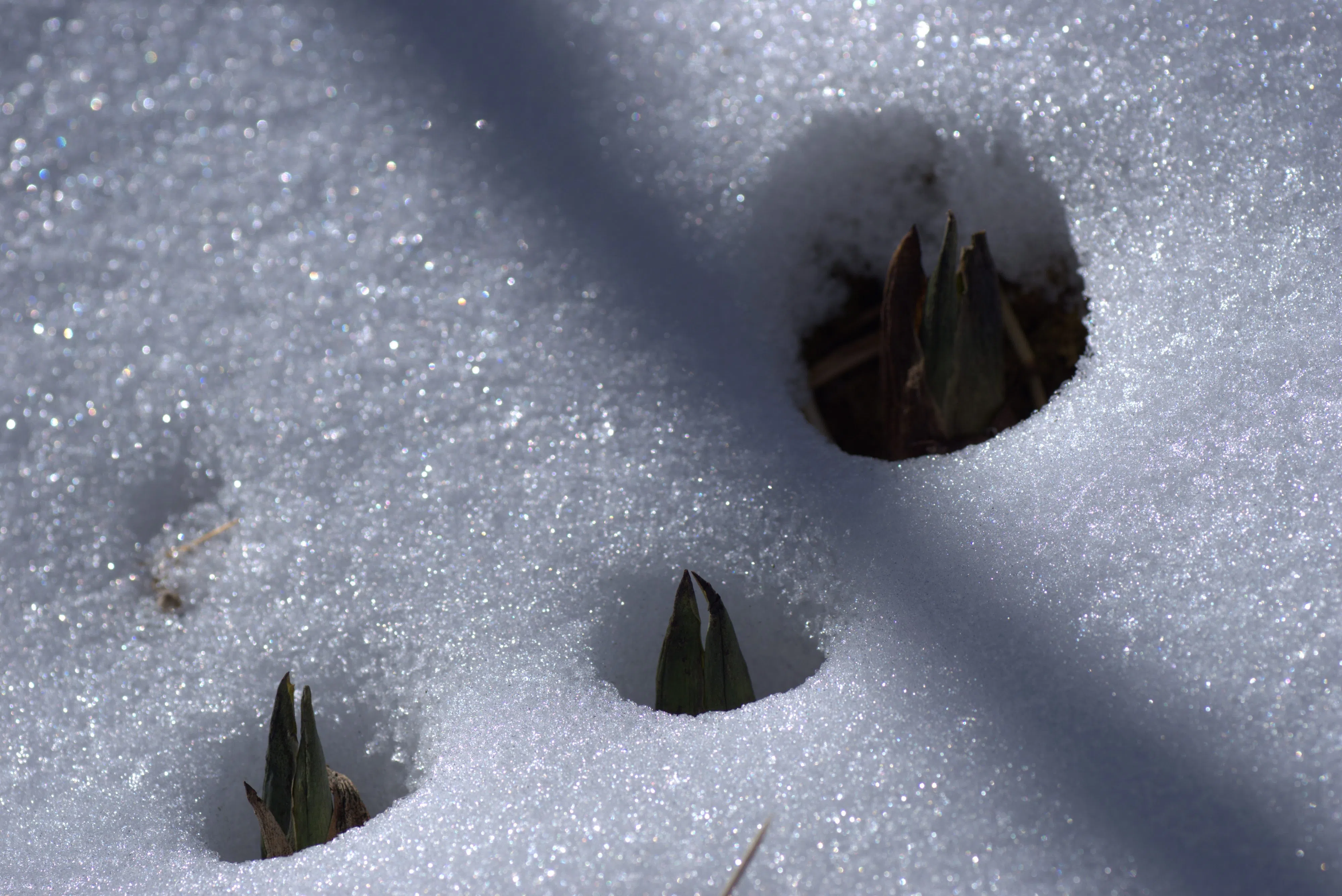
A few days prior I was walking through a wet shady swale where plenty of icy snow persisted. A pattern of circles cut through the ice with pointy green structure at their center. Skunk cabbage, one of the most abundant spring flowers in our swampy wetlands, is an early bloomer. It produces its own internal heat to melt the snow around it in a process called thermogenesis. As the snow melts, a burgundy flower with green mottling grows, releasing a putrid smell attractive to its fly pollinators.
On hummocks and cedar roots, a rich tapestry of mosses and liverworts looked soft and alive, drinking the fresh thaw of snow and damp, foggy air. Trailing through the moss there are the leaves of strawberries, sedges and ferns, never wilting in the subzero weather. They will likely be blanketed by snow again in the coming weeks. I can’t help but hope it melts quickly.