


The following article was written by Kristin Keck, a Teen Associate at the Manitowoc Public Library.
Hello from the Manitowoc Public Library Youth Services Department! It’s your friendly neighborhood Teen Services person, Kristin, here to tell you about the next hang-out coming up in January. We’re going to be creating some neurographic art.
It sounds kind of clinical, doesn’t it? Something to do with brains and nerves, right? Well, it does have to do with brains and nerves, but not in clinical way. Neurogaphic art turns out to be an easy way to reduce stress, meditate, and be creative, all at the same time.
If you’ve ever made a series of loops and squiggles while taking notes or scribbled some freeform shapes just to have something to do with your hands, you’ve created neurographic art. Dr. Pavel Piskarev, artist and psychologist, noticed that people tend to make the same kinds of doodles to relieve stress. He formulated some simple rules for the lines and shapes, created a mindfulness exercise to go with them, and named the practice neurography.
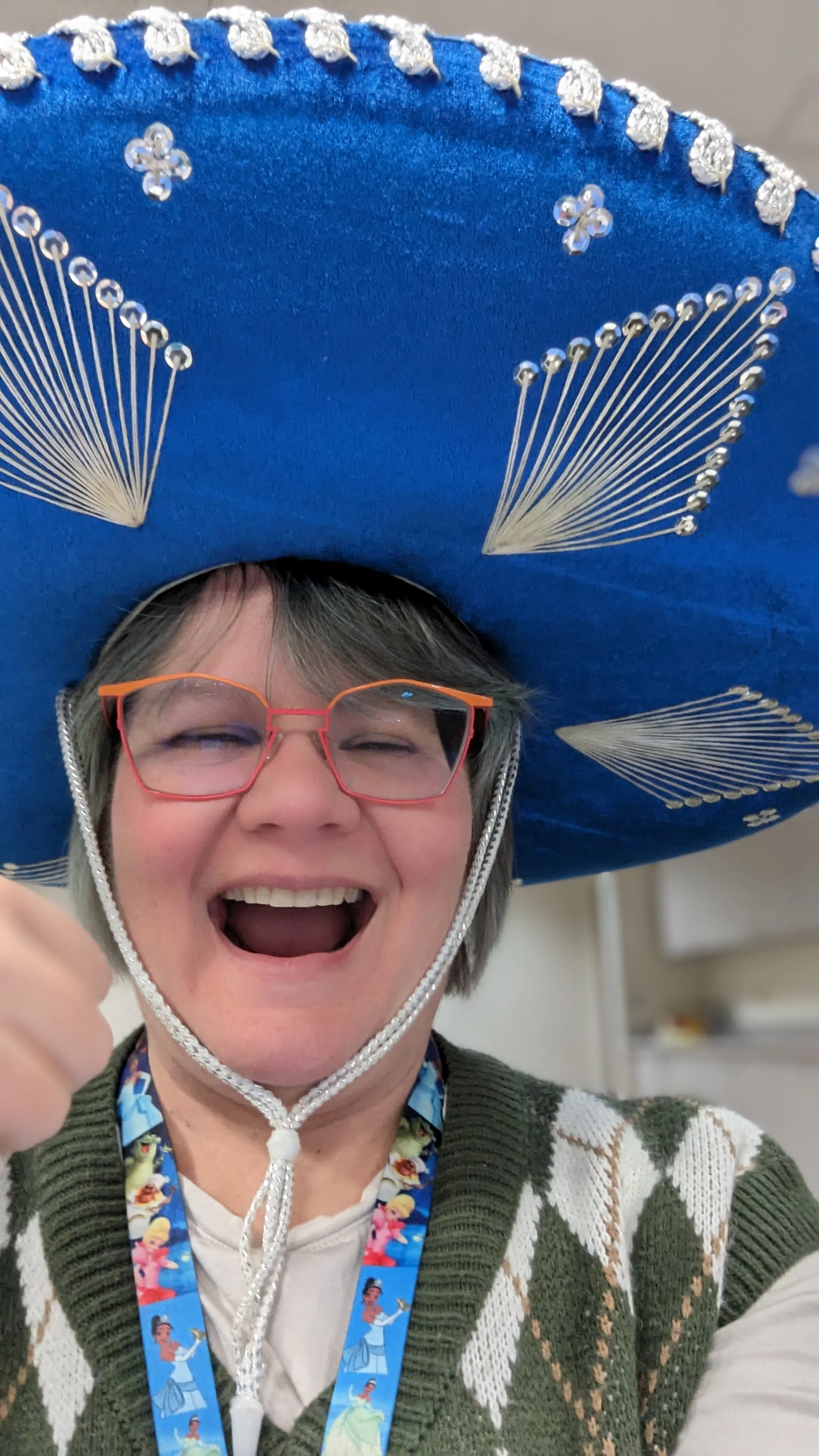
Kristin Keck
The idea that art can encourage deeper thinking and relaxation is not a new one. A recent study has shown that even viewing art on a regular basis can have positive mental benefits. Creating your own art is even better, and more fun. Neurographic art is a great fit because it is process art, not representational. Even if you can’t draw a tree or a vase to your satisfaction, you can draw a line.
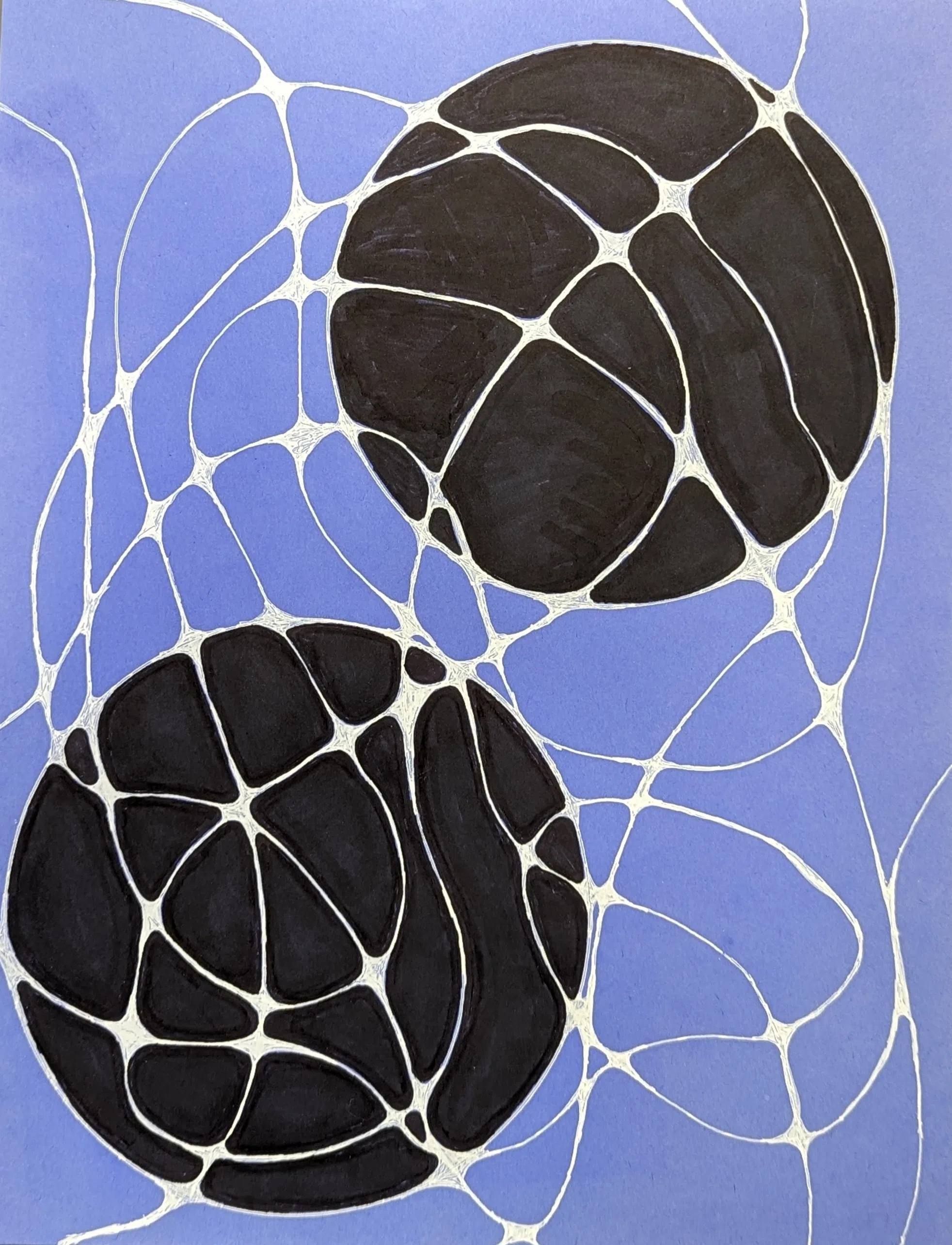
And that’s all this is, just lines and basic geometric shapes on a page. It is incredibly soothing to see the lines come together and form patterns—or not! Each intersection of lines is rounded off to create a continuous flow throughout the paper. (The intersections look like the neurons that transmit chemical messages in our brains; I begin to see where Dr. Piskarev got the name.)
The repetitive shapes and lines can be left as they are, but why stop there? Adding color and patterns and textures to highlight the spaces makes the page come alive. And it’s fun!
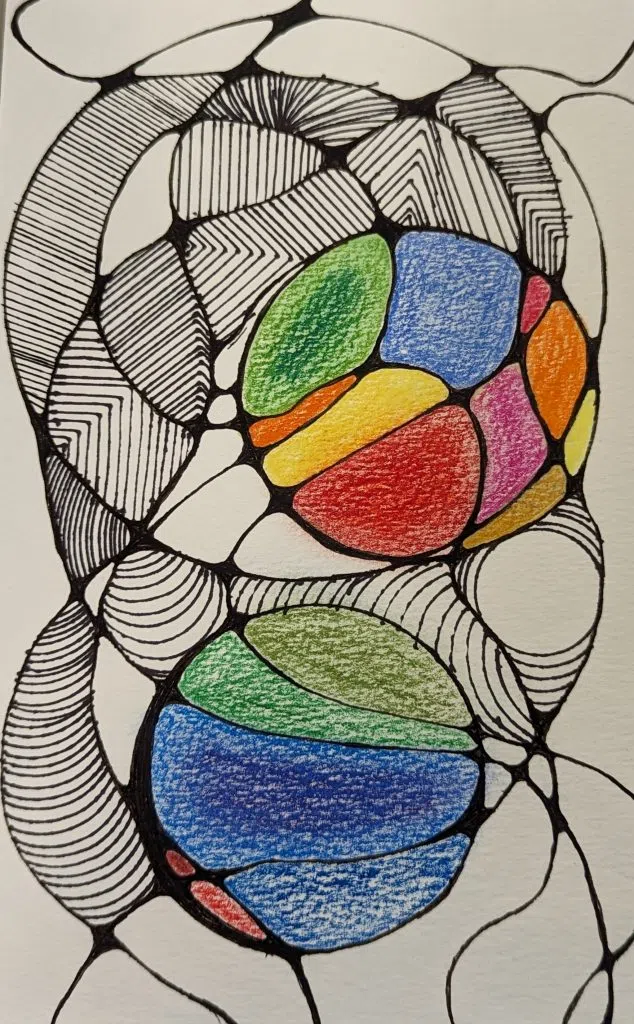
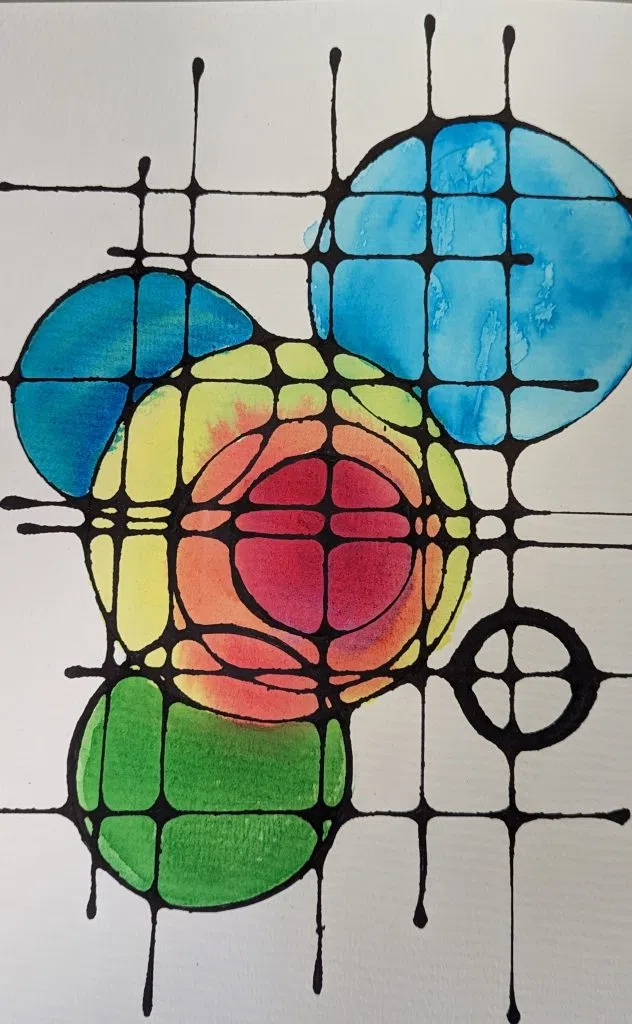
Because I’m not a trained psychologist, I can’t go into too much detail about the science behind neurographic art. I can say that moving the marker over the paper and seeing the lines really does relieve stress and create a meditative state. The pictures that I included to accompany this article are things I’ve done with no special training or artistic talent. I’ve added this to my regular de-stressing routine. If it really does help create new connections in the brain, as Dr Piskarev says, that’s even better. I could use a few more problem solving neurons.
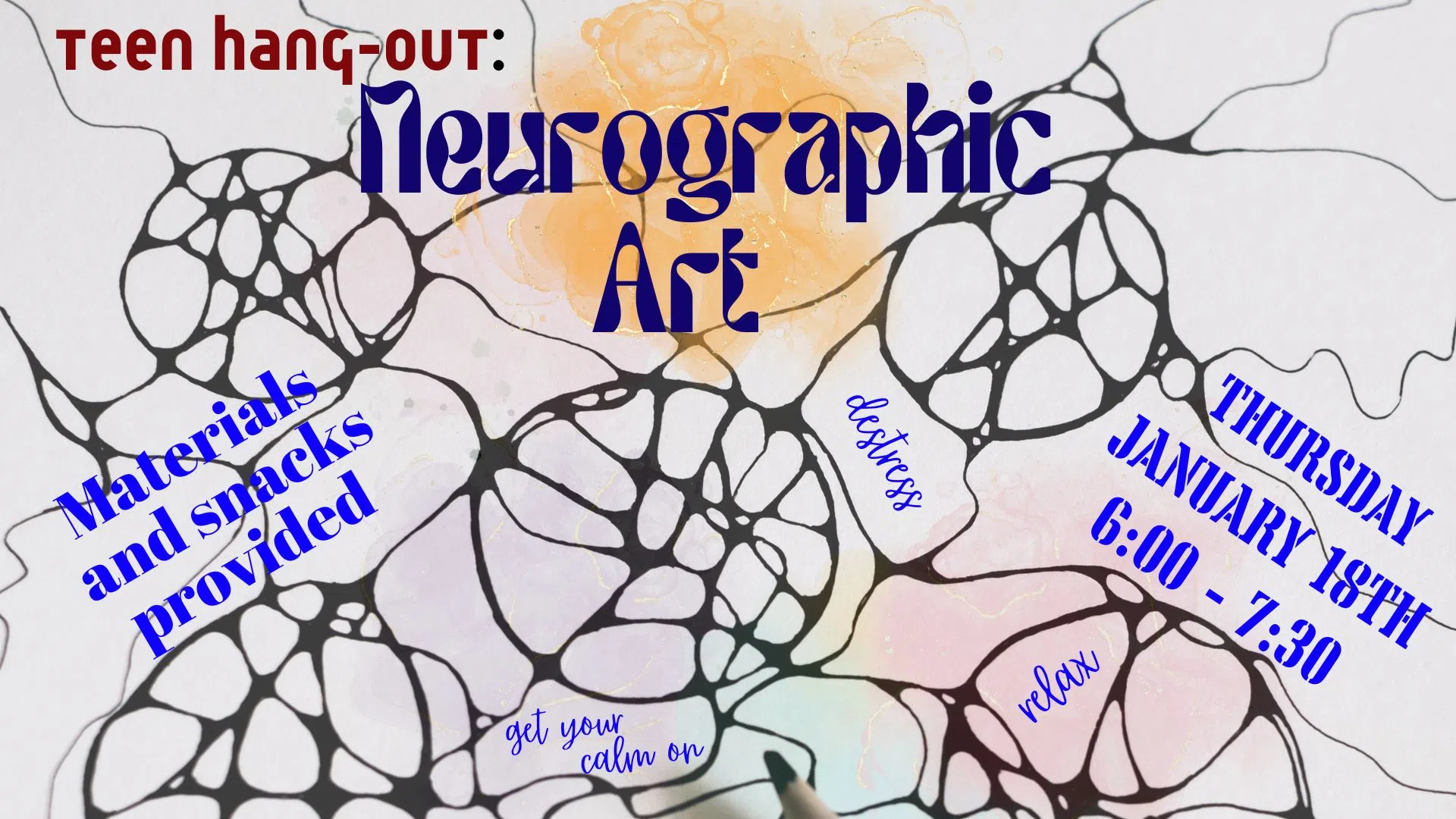
 Teens ages 11 to 18 can drop by the Library on January 18 at 6 PM for a chance to try their hands at neurographic art. I’ll have all the materials on-hand. We will be working with Sharpies and watercolor paints, so keep that in mind when you’re choosing what to wear. And, of course, I’ll have snacks on hand. No registration is required. Just stop by and have at some art. I can’t promise it will calm you down, but I’m sure that you will have a good time.
Keep an eye on our calendar (www.manitowoclibrary.org/events/month/2024/01) for more events at the Library!