



The following article was submitted by Tim Gadzinski, the Marketing Associate for the Manitowoc Public Library.
It’s pretty amazing what we aren’t taught in school, isn’t it?
I’m not referring to the basics—reading, writing, ‘rithmetic, et al. Specifically, I’m referring to what’s put into and what’s left out of curriculums when it comes to the teaching of history classes. Which is fairly astonishing when you consider that history is such a complex and crucial element when it comes to comprehending our identity: individually, nationally, and globally.
Additionally, history is unlike other subjects in that it essentially runs both ways. Not only does it serve as a reminder of what occurred in the past—it also serves as a roadmap of how we should and shouldn’t proceed as we move forward. As the saying goes, “Those who do not learn history are doomed to repeat it.”
Another aspect of history that all too frequently gets brushed aside is that learning the historic truth almost always should make the learner uncomfortable. Certainly, there are glorious and wonderful aspects of what we look at in our collective rearview mirror, but more often than not what has come before should challenge our way of thinking and shift our perception of how we see the past’s impact on the present. If history doesn’t move one out of one’s comfort zone, it’s really not doing its job. And it’s not really history—it’s a fairytale that makes one feel good about one’s inherent biases and little more.
Admittedly, I’ll never be confused for someone currently in school. Take a look at my headshot for the visual evidence. As such, I’m speaking specifically about my time spent in primary and secondary school. To be perfectly honest, it was a mixed bag—I did learn to speak some German, but not a single teacher ever mentioned Japanese-American internment camps in the United States during WWII, for example. Our system of education has definitely evolved since I was a student and in many ways, it’s definitely changed for the better. However, when it comes to history, there’s still quite a bit of pushback when it comes to passing along events and initiatives that actually happened in the past. Not so much from teachers, but from other members of our communities that seemingly aren’t thrilled with uncomfortable truths.
The American Indian Boarding School program would be one such initiative. And while this program has been in the news more lately, it’s not something that was mentioned broadly outside of First Nations communities until recently. At least to my knowledge.
Briefly summed up, the American Indian Boarding school initiative was put in place by the United States government beginning in the 1870s. It attempted to educate and assimilate Native Americans into “civilized” society by placing children—of all ages, from thousands of homes and hundreds of diverse tribes—in distant, residential boarding schools. Many were forcibly taken from their families and communities and stripped of all signs of “Indianness,” even forbidden to speak their own language amongst themselves.
Manitowoc Public Library is extremely fortunate and honored to be bringing a National Endowment for the Humanities On The Road Exhibition on this precise subject to our lakeshore community. “Away From Home: American Indian Boarding School Stories” takes a frank, open-eyed look at the Boarding School program and will be on display at MPL from Thursday, June 16, through Thursday, August 11.
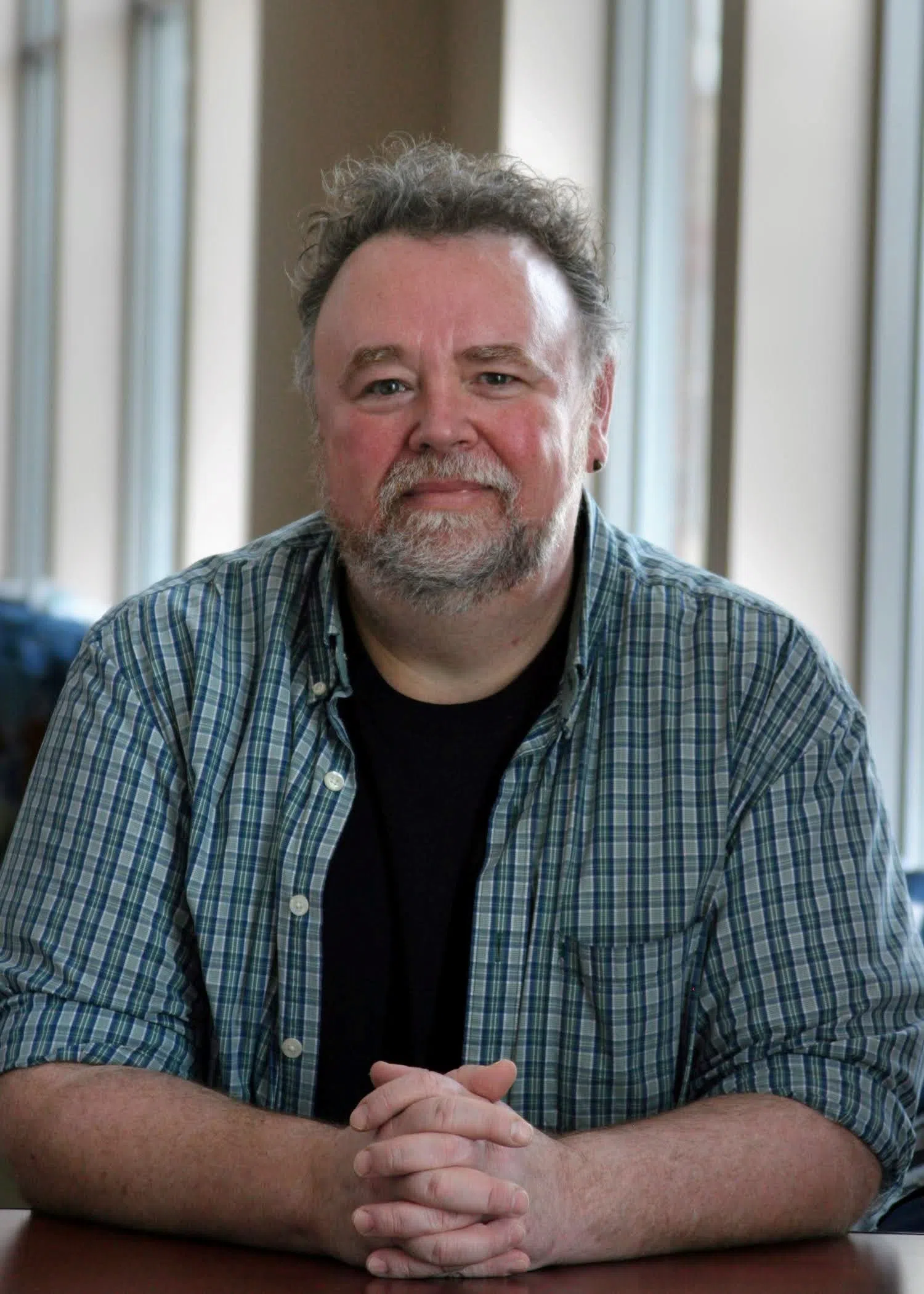
Tim Gadzinski
“Away from Home” explores off-reservation boarding schools in its kaleidoscope of voices. Visitors will explore compelling photographs, artwork, interviews, interactive timelines, and immersive environments, including classroom and dormitory settings. Objects such as a period barber chair and a young Seminole girl’s skirt, as well as reproduction elements poignantly illuminate first-person accounts. Stories of tragedy and familial love and friendships intersect.
This Exhibition is made possible by NEH on the Road, a special initiative of the National Endowment for the Humanities. It is brought to you by Mid-America Arts Alliance. It was adapted from the permanent exhibition, Away from Home: American Indian Boarding School Stories and organized by the Heard Museum in Phoenix, Arizona. Any views, findings, conclusions, or recommendations expressed in this exhibition do not necessarily represent those of the National Endowment for the Humanities.
Many fantastic auxiliary events have also been slated to enhance the exhibit—from a 3-part virtual series presented by Napos, a First Nations Oral Historian in Residence in the UWGB Education Center for First Nations Studies, to Oneida Nation storytellers for our younger patrons to a live musical performance by international touring artist, Wade Fernandez (Walks with Black Wolf). For further details and to see the entire array of what’s happening at MPL this summer, please head to the Events Calendar on the MPL website (www.manitowoclibrary.org/events).
We hope you’ll join us for “Away From Home.” It’s an incredible opportunity to learn more about a darker corner of American history of which you may not have been aware or to augment your knowledge if you already have an awareness of the Boarding School program. When all is said and done, one can never possess too much knowledge. Because after all, knowledge is power.