



The following article was written by Kait Piazza for the Art Forward series from the Rahr-West Museum.
It’s safe to say that everyone has been guilty of pulling into their driveway after a long day at work, or a weekend run to the grocery store and thinking “How did I even get here?”. We’re all busy, tired, and pretty sure that we’ve been wherever we are long enough to have seen it all. Long story short, it’s easy to stop looking around and appreciating the unique beauty of our communities.
Maybe you forgot, or maybe you didn’t know, but the City of Manitowoc has eight eligible historic districts containing nearly 700 properties. What does that mean you may ask? Well, it means that the neighborhoods within this city contain a rich fabric of unique history that often incorporates a local twist on design and materials.
Still not sold on the idea that Manitowoc’s neighborhoods have a lot to offer? Let’s take a look at some of the most unique and architecturally significant buildings around the city, as well as a quick guide on identifying architectural elements common to each style. Who knows, maybe you’ll discover something new about your own home.
Charles Spindler Residence, circa 1897
Style: Queen Anne
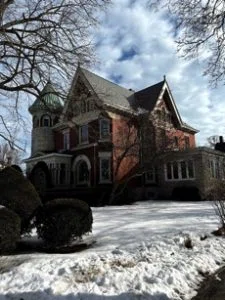
Figure 1: Charles Spindler Residence, 2022
What to look for: Asymmetrical form, large front porch, steeply pitched and irregularly shaped roof, towers, extensive ornamentation and multiple textures, Palladian windows (three windows with center arch).
Style: Gothic Revival
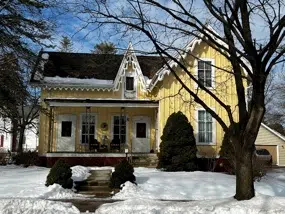
Figure 2: G.C. Davidson Residence, 2022
What to look for: Gothic (pointed) arches, decorative gable trim (vergeboards/gingerbread trim), steeply pitched front gable roofs (centered or paired and often crossed), one-story porch, multi-colored stone or board and batten siding.
Ruth Richter Residence, circa 1926
Style: Georgian Revival
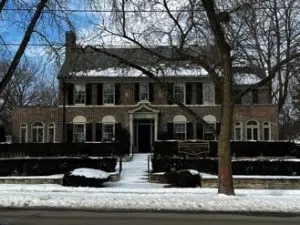
Figure 3: Ruth Richter Residence, 2022
What to look for: Symmetry, masonry construction, bold entryway, no porch, side gable roof.
Julius Lindstedt Residence, circa 1895
Style: Shingle Style
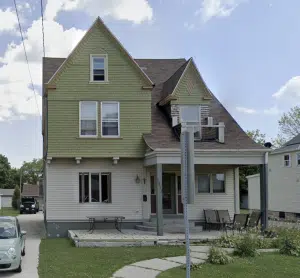
Figure 4: Julius Lindstedt Residence, 2022
What to look for: Uniterruppted wood shingle walls, steeply pitched wood shingle roofs, often with cross gables, expansive porches.
J.M. Wattawa Residence, circa 1916
Style: Craftsman
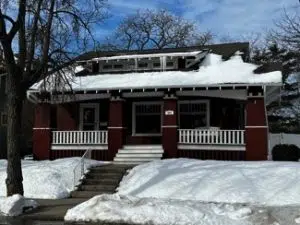
Figure 5: J.M. Wattawa Residence, 2022
What to look for: Low pitched gable roofs, expansive porches, tapered square columns, exposed beams and rafters, mixed materials (wood, stone, stucco).
Frank J. Kersher Residence, circa 1920
Style: Prairie
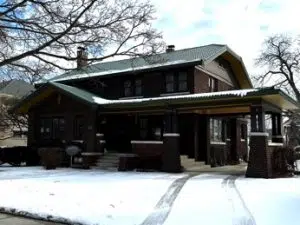
Figure 6: Frank J. Kersher Residence, 2022
What to look for: Low Pitched Roof, horizontal lines, square porch support columns, built-in planters, floral pattern details, intricate or small window pane design.
Richard Kendall Paine Residence, circa 1881
Style: Italianate
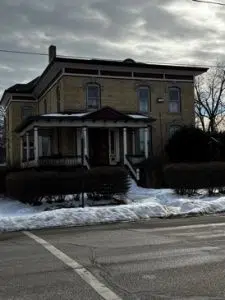
Figure 7: Richard Kendall Paine Residence, 2022
Though Italianate shares few characteristics with Gothic Revival it too has its roots in England and gained popularity with the rise of the picturesque movement. While formal examples of the style can be found they generally are informal in design. They are most readily recognized by their low-pitched roofs, often paired with a square cupola, and arched window crowns. The Richard Kendall Paine Residence is no exception to the style but forgoes the decorative brackets often seen within the overhanging eaves. It also incorporates more local materials with its use of Cream City Brick.
What to look for: Low pitched roof, square cupola/tower, two-three stories, elaborate window crowns (often U-shaped), deep overhanging eaves with decorative brackets.
Hugo L. Vits Residence, circa 1926
Style: Tudor Revival
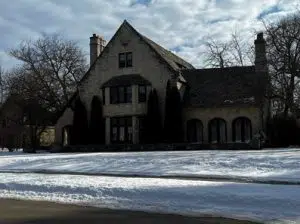
Figure 8: Hugo L. Vits Residence, 2022
What to look for: Steeply pitched roof, prominent front-facing gable, clustered, tall and narrow windows, large chimney with decorative pots, front entry with round or Tudor arch, decorative half-timbering.
At this point your brain may be ready to explode, so this feels like a good place to stop (yes…I could keep going). But perhaps once you’ve recovered, the next time you’re out you’ll take a look around and find yourself saying things like “Oh wow, that Queen Anne really is a lot” or “Do you see the Prairie influences on that Craftsman?”. Yeah, you might become that guy or maybe you will just become more curious about your own home or another building in the city. In that case, let us know!
Kait Piazza
Planner-Business and Housing Development
Community Development Department, City of Manitowoc
References:
McAlester, Virginia. A Field Guide to American Houses: The Definitive Guide to Identifying and Understanding America’s Domestic Architecture. New York, Alfred A, Knope, 2018