



State and local agencies are investigating the outbreak that has affected at least 4 people in Wisconsin
The Wisconsin Department of Health Services, Department of Agriculture, Trade, and Consumer Protection, and local health departments are investigating an outbreak of Salmonella infections. To date, the investigation has identified four Wisconsin residents who are infected with the same strain of Salmonella. The four Wisconsin patients are linked to Butterball raw ground turkey products. Additionally, a Minnesota resident with the same strain of Salmonella also reported eating ground turkey, but the brand is unknown. As a result of this outbreak, Butterball is voluntarily recalling 78,164 pounds of raw ground turkey products..
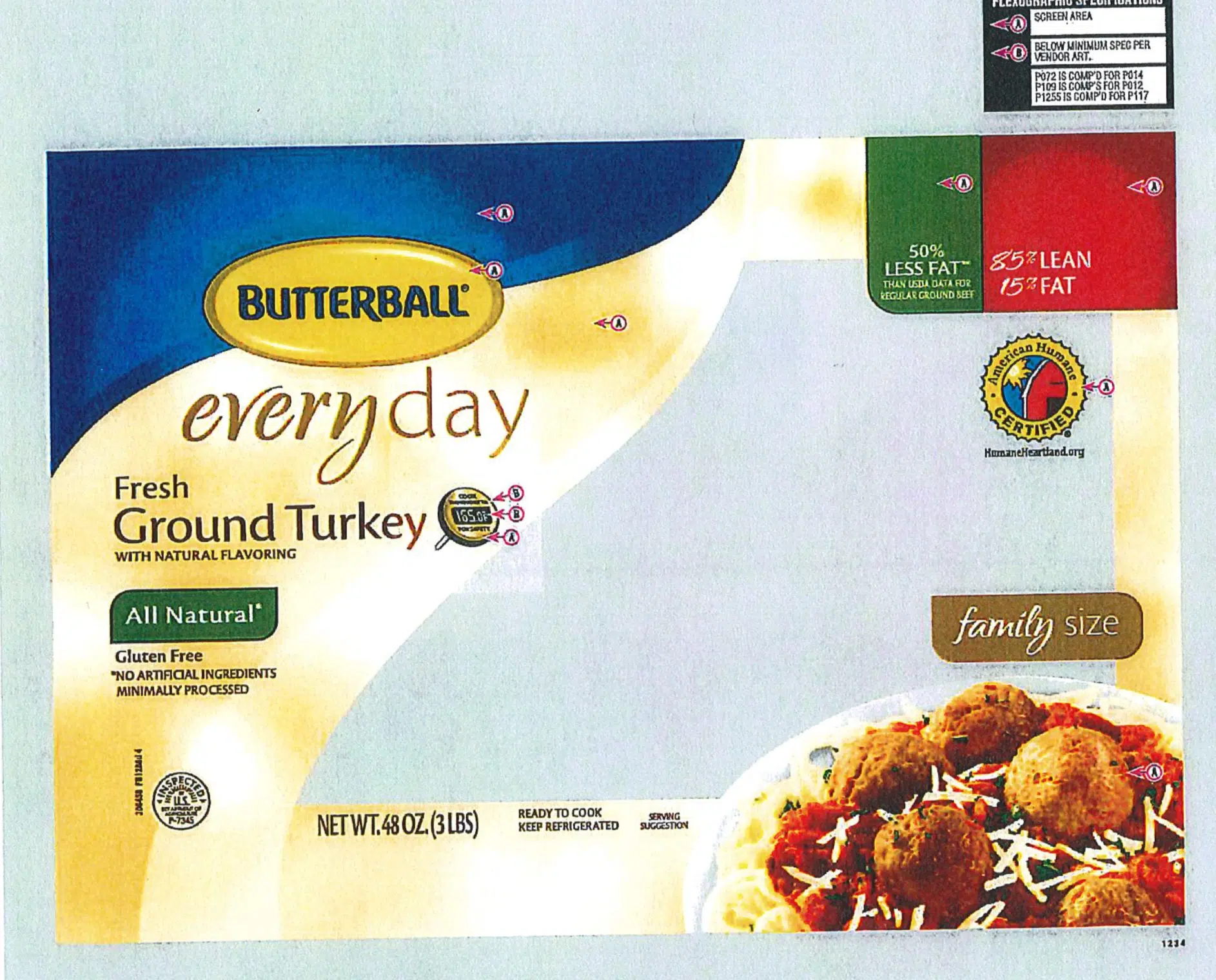
The prepacked raw ground turkey was produced on July 7, 2018. The following products are subject to recall: [View Labels (PDF only)]
- 48-oz. plastic wrapped tray containing “BUTTERBALL everyday Fresh Ground Turkey WITH NATURAL FLAVORING (85% LEAN/15% FAT)” with sell or freeze by date of 7/26/18, lot code 8188, and UPC codes 22655-71555 or 22655-71557 represented on the label.
- 48-oz. plastic wrapped tray containing “BUTTERBALL everyday Fresh Ground Turkey WITH NATURAL FLAVORING (93% LEAN/7% FAT)” with sell or freeze by date of 7/26/18, lot code 8188 and UPC code 22655-71556 represented on the label.
- 16-oz. plastic wrapped tray containing “BUTTERBALL everyday Fresh Ground Turkey WITH NATURAL FLAVORING (85% LEAN/15% FAT)” with sell or freeze by date of 7/26/18, lot code 8188 and UPC code 22655-71546 represented on the label.
- 16-oz. plastic wrapped tray containing “BUTTERBALL everyday Fresh Ground Turkey WITH NATURAL FLAVORING (93% LEAN/7% FAT)” with sell or freeze by date of 7/26/18, lot code 8188 and UPC codes 22655-71547 or 22655-71561 represented on the label
- 48-oz. plastic wrapped tray containing “Kroger GROUND TURKEY FRESH 85% LEAN – 15% FAT” with sell or freeze by date of 7/26/18, lot code 8188, and UPC code 111141097993 represented on the label.
- 48-oz. plastic wrapped tray containing “FOOD LION 15% fat ground turkey with natural flavorings” with sell or freeze by date of 7/26/18, lot code 8188 and UPC code 3582609294 represented on the label.
The products subject to recall bear establishment number “EST. P-7345” inside the USDA mark of inspection. These items were shipped to institutional and retail locations nationwide.
Persons and establishments who may have Butterball ground turkey products in their freezer should check to see if their product is included in the recall, and if so, are advised to discard any remaining product. Food pantries, food banks, and patrons of those establishments are especially encouraged to check any ground turkey they have received because this product was also distributed through these routes.
Raw turkey and other poultry products can be contaminated with Salmonella or other pathogens. When handling raw poultry products, it is important to take the following steps to protect you and your family:
- Wash hands and surfaces often when handling raw poultry.
- Separate raw meats and poultry from other foods in the refrigerator.
- Refrigerate or freeze raw poultry promptly after purchasing.
- Cook all raw poultry to an internal temperature of 165ºF.
- Always follow manufacturer’s instructions provided on product packaging.
- Place cooked poultry only on a clean dish before serving.
- Report suspected food poisoning to your local health department.
Salmonellosis is caused by Salmonella bacteria that are spread by eating or drinking contaminated food or water, or by direct or indirect contact with fecal matter from infected people or animals. Symptoms include diarrhea, abdominal pains, fever, and vomiting that lasts for several days. Bloodstream infections can occur, but are rare, and can be quite serious in young children and older adults. Most people recover from salmonellosis on their own, but may require extra fluids to prevent dehydration.
If you have consumed any of the recalled Butterball raw ground turkey products and are experiencing symptoms of salmonellosis, contact your health care provider. Consumers experiencing symptoms should also contact their local health department.